
A palatal expander is an appliance that gently widens a child's upper jaw while it is still growing, creating room for teeth, correcting crossbites and often improving nasal breathing. At Kinard Family Dental in Helotes, TX, Dr. Sarah Kinard uses palatal expansion as part of pediatric airway dentistry, alongside Myobrace for kids. Request an evaluation for your child.
Schedule NowThe upper jaw is formed in two halves joined down the middle of the palate. In children, that join has not fully fused, so steady, gentle pressure can widen the jaw as it grows. A palatal expander applies that pressure from inside the mouth, guiding the arch to the width it needs rather than leaving teeth to crowd into too little space.
Because the floor of the nose sits directly above the palate, widening the upper jaw can also increase the space for air to pass through the nose. That is why palatal expansion is part of airway care at our Helotes practice, not only a step before braces.
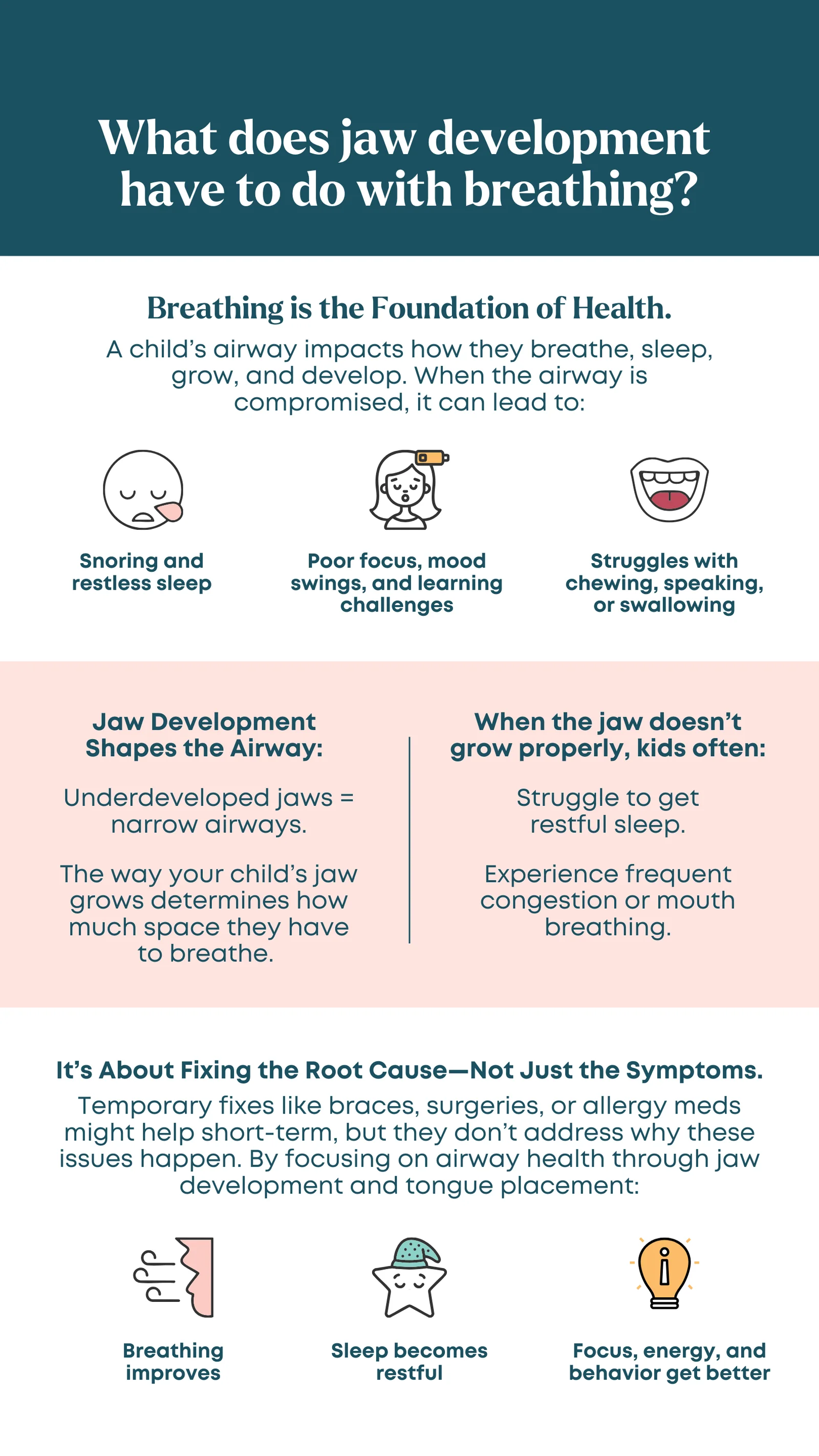
Upper back teeth that bite inside the lower teeth instead of outside them.
Permanent teeth coming in overlapped or with no room to erupt.
Often visible as a deep, V-shaped roof of the mouth.
A narrow upper jaw can restrict the nasal airway.
Canines or other teeth blocked from coming through.
Many of these signs overlap with airway concerns. Our article on why children mouth breathe explains how breathing habits and jaw width are connected.
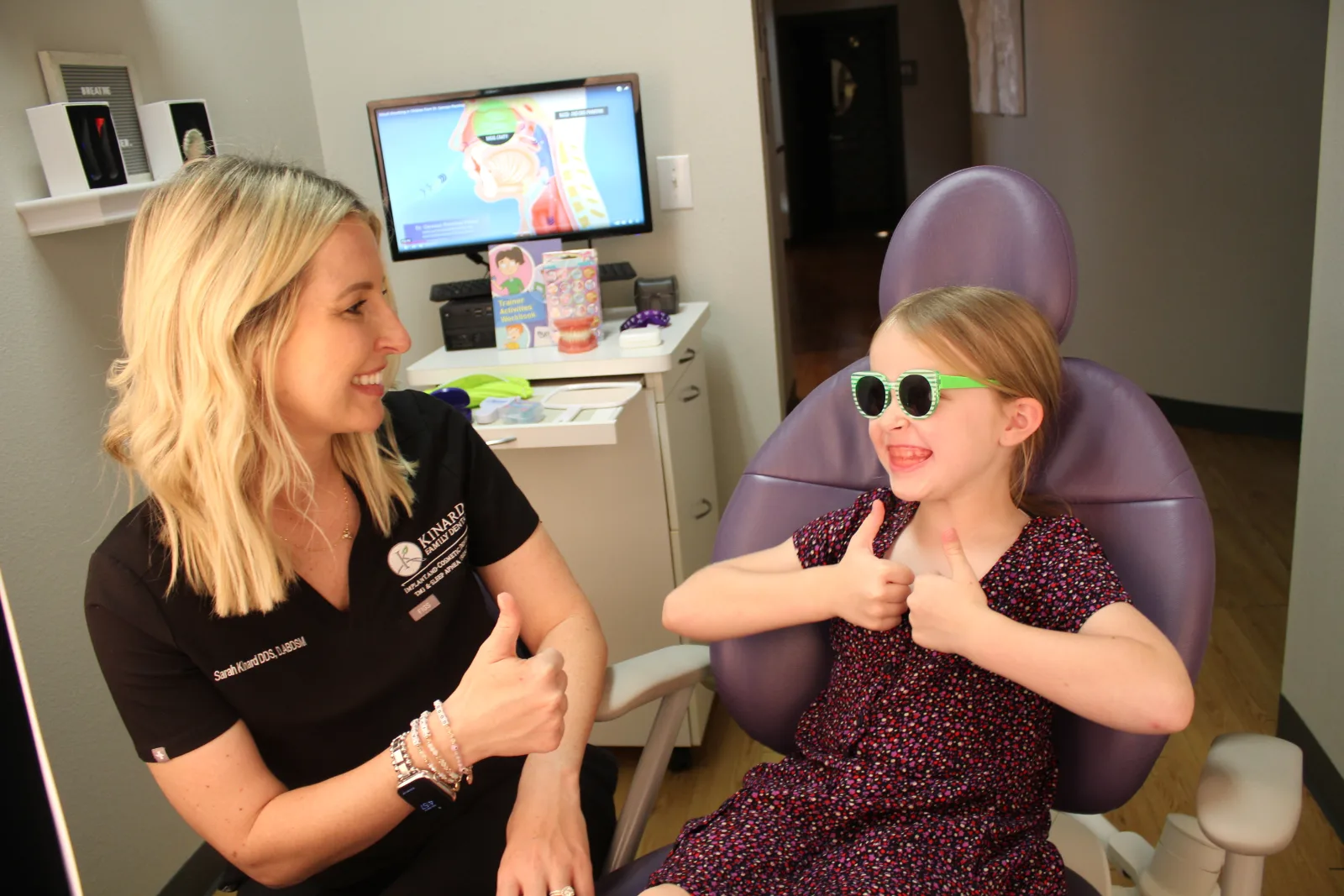
Expansion is most effective while the palate is still growing, most often between about ages 7 and 12. Treatment is usually easier and faster before the growth spurts of the teen years, when the midline of the palate begins to fuse. An evaluation around age 7 lets us see how the jaw is developing and plan treatment at the right time.
A full exam and imaging show the width of the upper jaw, the bite and the airway.
The expander is made from a digital scan to fit your child's mouth.
For fixed expanders, small adjustments are made at home on a set schedule, usually for a few weeks.
The expander stays in place for several months so the new width settles.
Progress is checked regularly, and the next step is planned with you.
Some children are better suited to a removable or slower expansion appliance. The right option depends on age, the amount of expansion needed and how well your child can manage the appliance.
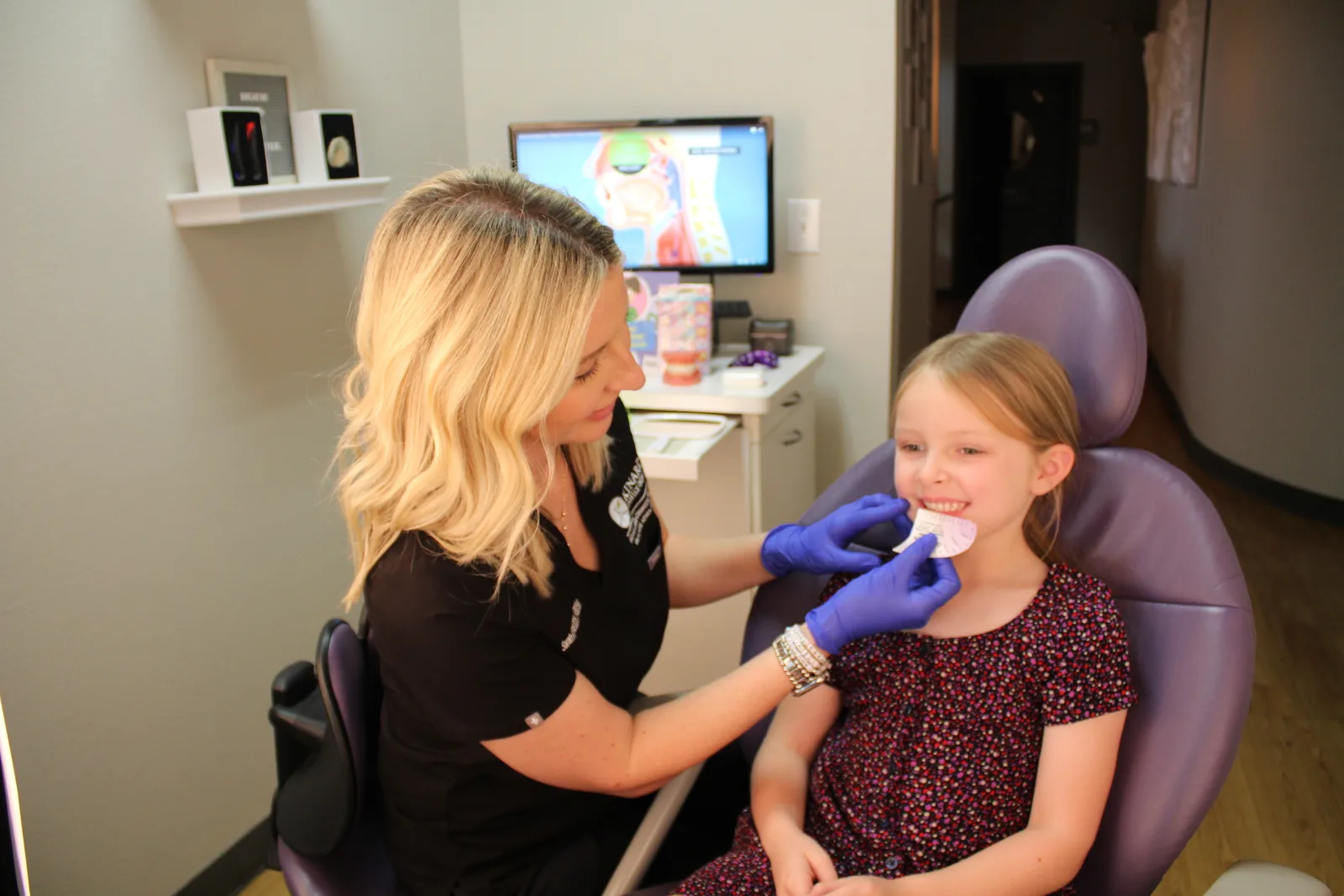
Most children feel pressure rather than pain, mainly in the first few days and right after an adjustment. Speaking and eating can feel different for a few days while the tongue adapts. A small gap between the upper front teeth is common during expansion and usually closes on its own afterward.
Expansion changes the shape of the jaw, while habits like mouth breathing and low tongue posture shape how it grows from then on. That is why we often pair expansion with Myobrace for kids, which trains the tongue, lips and breathing. Children with signs of sleep-disordered breathing may also be evaluated for Vivos treatment for kids.
Once the jaw has reached the planned width, the expander stays in place while new bone fills in along the midline of the palate. After it is removed, a retainer or the next phase of treatment holds the result. Some children move on to Myobrace or orthodontic alignment, while others simply continue with regular checkups as their permanent teeth come in.
We also keep watching how your child breathes and sleeps. If snoring or mouth breathing continues after expansion, it may point to another cause, such as enlarged tonsils or adenoids, and we refer you to a physician when that is the case.
Dr. Sarah Kinard is a Diplomate of the American Board of Dental Sleep Medicine and focuses on how jaw development affects breathing and sleep. Kinard Family Dental is at 12740 Bandera Road, Suite 100, Helotes, TX 78023, and welcomes families from San Antonio, Boerne and Leon Valley. Call (210) 695-1200 or request an appointment.

Most children have an active expansion phase of a few weeks, followed by several months of wear while the new width stabilizes. The full timeline depends on how much expansion is needed and how your child responds.
Most foods are fine once your child adjusts, usually within a few days. Avoid sticky and very hard foods such as caramel, gum and hard candy, which can loosen or damage the appliance.
Speech often sounds slightly different for the first few days while the tongue gets used to the appliance. Most children speak normally within a week.
Yes. A gap often opens between the upper front teeth as the jaw widens. It is a sign that expansion is working and usually closes on its own after expansion stops.
Widening the upper jaw can increase space in the nasal airway, and some children breathe through the nose more easily afterward. Results vary, which is why breathing is assessed before and after treatment.
Sometimes. Expansion creates room and corrects the bite, which can shorten or simplify later orthodontic treatment. Whether braces are still needed depends on how the teeth come in.

